Battery-augmented Cold Chain Equipment
About this page
This page was written by the New Horizons engineering team, which operated until December 2025. First-person references ("we", "our") are the original authors'. A number of those authors are now working with Phoenix GH, which maintains this material and stands behind it. Questions and comments are welcome — please get in touch.
Overview/introduction
Recent advancements in battery performance, reliability, safety, and scaled availability make it worthwhile to reconsider the use of batteries in vaccine cold-chain equipment (CCE). It is inherently challenging to cost-effectively design and manufacture CCE that maintain appropriate temperatures across a wide range of ambient conditions and power availability conditions, so having more tools in the design toolbox can be quite helpful.
The primary architectures used in CCE conforming to WHO IMD-PQS specifications, are insulated thermal batteries and Solar Direct Drive (SDD) compressors. As an alternative, an actively cooled cold-box design that uses a vapor compression refrigeration system with a battery for independence is the most likely potential starting point. As of 2025, there is already a published PQS standard (WHO/PQSE003/TS01) that could accommodate such a product and there are clear use cases for transportable CCE.
Many of the design features in ice-lined refrigerators (ILRs) and SDD vaccine fridges exist to ensure reliable vaccine storage in environments with unreliable power. For ILRs, the challenge is to protect against unreliable conditions on the electrical grid itself, including power outages and under/over voltage conditions. For SDDs, the challenges stem from the diurnal solar cycle and variable weather conditions: it's common that SDDs need to maintain suitable vaccine chamber temperature for multiple days during cloudy periods. To provide safe vaccine storage in the face of such conditions, there are two core architectural components have emerged, which carry important tradeoffs:
Large insulated thermal battery:
Positive attributes:
-
Extended (3+ day) holdover time is possible
-
The holdover mechanism is entirely passive, which delays vaccine thermal exposure in the event of (other) critical system failures
-
Well-engineered systems of this type require minimal maintenance
Negative attributes:
-
Larger insulated volume means more incoming parasitic heat → higher energy consumpion → larger solar array or larger energy bill.
-
Larger insulated volume also means more insulating foam → heavier → more expensive to ship → harder to get through doorways and fit into immunization rooms.
-
Water-based thermal batteries commonly require some active thermal management or control scheme to sucessfully build up holdover across a wide range of ambient temperatures while maintaining PQS grade-A freeze prevention.
-
Phase-change material (PCM)-based thermal batteries can avoid some of the control challenges, but are more expensive and a lower latent heat of fusion compared to water ice translates to a larger thermal battery volume for a given holdover time.
Solar direct drive compressors:
Positive attributes:
-
Demonstrated to be reliable at scale
-
Relatively simple electrical architectures are possible, with no energy storage between panels and compressor
Negative attributes:
- A significant portion of available solar energy is unutilized, leading to larger required solar array for a given required compressor energy consumption. SDD compressors have a minimum required power to start and a maximum usable power during operation, which means that the solar modules need to be oversized to allow the compressor to start under a wide range of light conditions.
When considering all of these attributes, it is clear that the current generation of SDD and ILR fridges offer excellent performance, but with financial, complexity, and energy costs. This is not intended to be a critique of the current architectures, which are reliably serving as the backbone of the vaccine global cold chain. Rather, it is intended to suggest possible directions for future evolution of vaccine cold chain systems, especially as new technologies and architectures are derisked and demonstrated at scale.
Revisiting batteries
Battery-solar fridges were commonplace before solar direct drive technology was developed and scaled, and developed a poor reputation. As we understand it, the major issues were associated with the battery and charging subsystem. Specifically:
-
Unsealed lead-acid batteries require active preventative maintenance to keep them at an appropriate electrolyte level.
-
Even the best-maintained lead-acid batteries may not last the minimum 10-year lifespan for CCE, and poorly maintained batteries may only last a small fraction of that time.
-
These lead-acid batteries are generally useful and could be removed for use in other applications.
-
Batteries were commonly installed in an external battery box, located near the fridge. These boxes were generally lockable, but it was common for ancillary loads to be directly connected to these batteries. Directly connected loads would bypass any installed charge/discharge controller, allowing batteries to be drawn below their allowable depth of discharge, resulting in permanent damage.
Recent advancements in lithium-ion battery designs and supply chains make the application of batteries in the vaccine cold chain worth revisiting. For the purposes of this discussion, we focus on the LiFePO4 Li-ion battery chemistry, commonly referred to as “LFP” or “Lithium iron phosphate” batteries, but many of the same characteristics apply to other Li-ion chemistries such as Lithium Nickel Maganese Cobalt Oxide (NMC) or Lithium Nickel Cobalt Aluminum Oxide (NCA). Other rechargeable battery chemistries such as NiMH may also be competitive for some applications. The characteristics of LFP batteries that make them particularly compelling for use in the vaccine cold chain are:
-
No maintenance.
-
Integrated protection via battery management system (BMS) that prevents over-charging, over-discharging, and overcurrent.
-
High cycle life, providing 3,500-5,000 cycles to 80% depth of discharge. This makes a 10-year battery life comfortably achievable, given that for many applications the battery would only be cycling every 3-7 days or longer.
-
Low cost: $250/kWh to $300/kWh retail prices at small volumes.
-
Excellent thermal robustness, with some designs able to be charged at +55°C and discharged at +60°C.
-
Adequate energy density (about 120 Wh/kg)
-
Global battery supply chain is rapidly scaling to meet demands for electric vehicles, grid energy storage, and other applications.
Non-LFP Li-ion chemistries such as NMC and NCA generally have higher energy density but require more careful thermal management with lower maximum charge and discharge temperatures. They are also typically more expensive. While these chemistries are well-suited to certain portable applications where minimizing mass is critical, we recommend considering the ultra-robust LFP chemistry where mass is not a critical design constraint.
When intelligently integrated into an overall CCE system, these batteries have the potential to provide a valuable additional option in supplier and customer toolboxes.
CCE system integration
The basic premise of an optimized battery-augmented CCE is to store energy in the battery rather than storing it in the insulated thermal mass of the refrigerator. This has a few advantages:
-
Simplifies the CCE thermal architecture: rather than designing an extended-hold-time thermal battery that can be evenly frozen and melted, a simpler architecture is possible using classic volume manufacturing techniques with a basic PCM liner to ensure consistent vaccine-safe temperatures.
-
Modularized designs are possible: different holdover durations or applications are possible by specifying different battery capacities.
-
The energy storage component is lighter, somewhat smaller, and less constrained in its location compared to an ice lining (see endnotes). This makes it possible to decrease the size of the cabinet for a given storage capacity, which allows the fridge to fit into smaller spaces and could have benefits for shipping.
Example integration
We assembled a basic proof-of-concept prototype of a battery-augmented vaccine refrigerator using an ICECO VF45 portable refrigerator as a starting point. This is a commonly available commercial-off-the-shelf (COTS) cooler with simple construction, which retails for approximately USD 560. The following modifications were made to this cooler to optimize it for vaccine-safe operating characteristics:
-
We replaced the stock Secop BD35F compressor with a newer generation Secop BDn45f to reduce weight by 2 kg and increase cooling capacity by about 20%.
-
We lined the inside of the storage compartment with eleven 120 g solid-state PCM pouches with a phase change point of about +5°C. This PCM provides a latent heat buffer to dampen the temperature swings due to compressor cycling, and provides user-independent freeze-free operation.
-
We fabricated and installed a prototype aluminum vaccine compartment liner with 0.030" (0.76 mm) thickness to make the vaccine compartment more isothermal.
-
We added a door sensor and a temperature sensor, and integrated these signals with New Horizons' Demo EMS logger.
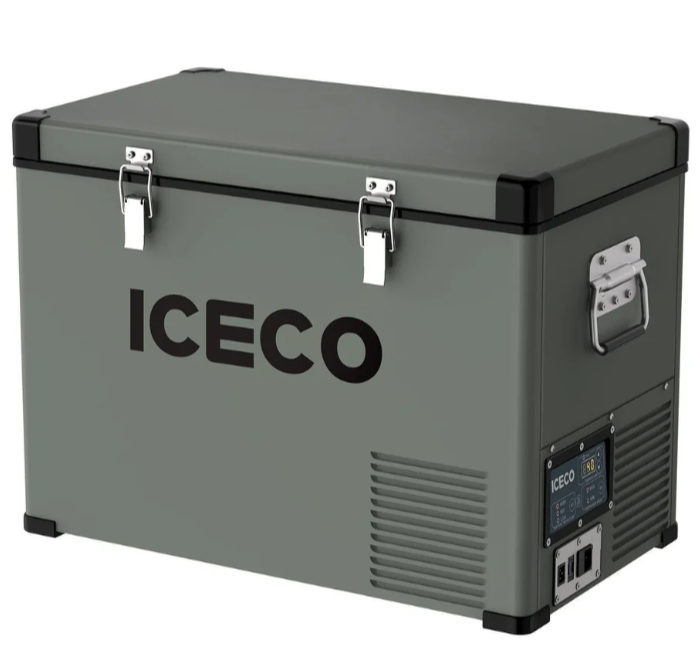
Figure 1: Stock ICECO portable refrigerator
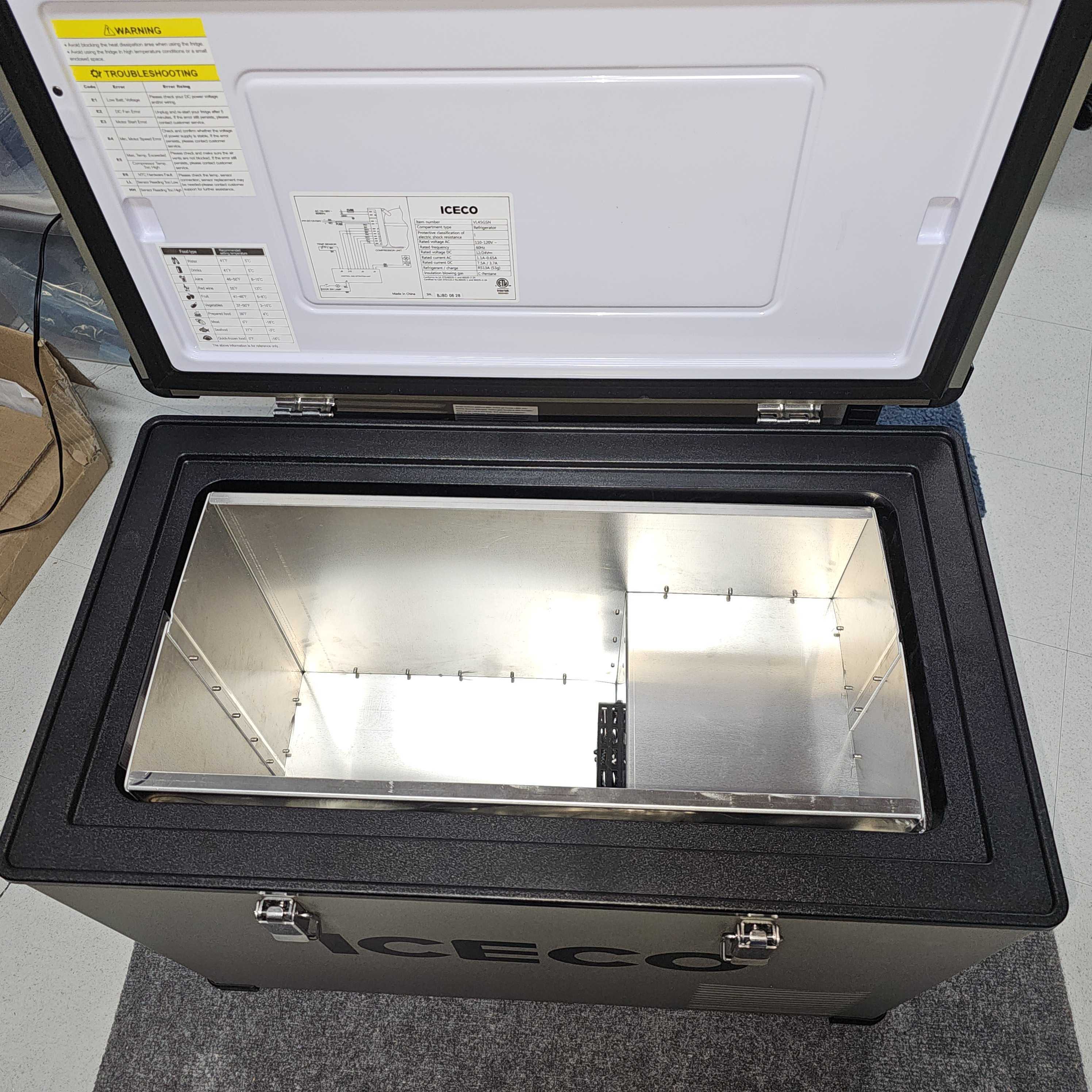
Figure 2: View of vaccine compartment of modified ICECO portable refrigerator, showing the aluminum liner
Electrical integration:
A 640 Wh dual AC/Solar input battery pack using off-the-shelf components has been prototyped for this fridge using the following components:
-
Renogy 12 V 50 Ah LiFePO4 battery ($169)
-
Genasun GV-10 MPPT solar battery charger ($140)
-
New Horizons' AC voltage protection module to protect the AC input from sustained over- and under-voltage as well as impulsive transients ("surges")
-
MEAN WELL LPV-100 DC power supply ($24)
-
Roadmaster Hy-Power dual common-cathode diode ($15)
-
Miscellaneous wiring, fuses, switches, connectors, fuel gauge, enclosure ($80)
This architecture uses a common-cathode diode pair to automatically select the higher DC voltage from either the solar input or the protected AC input, and uses that DC voltage to charge the 12 V battery.
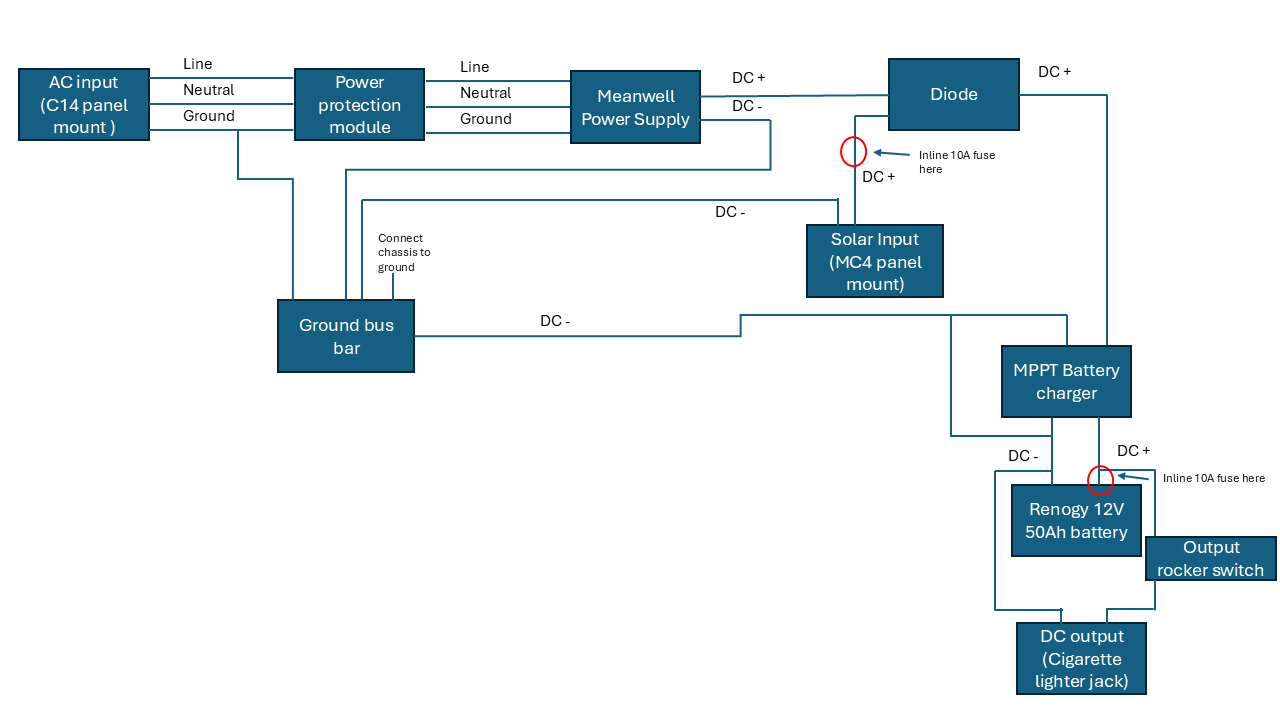
Figure 3: Wiring diagram
Note that this electrical architecture is intended solely for functional technology demonstration purposes, not production or deployment. It would be possible to optimize this design for lower cost, greater robustness, and safety. Furthermore, the battery pack is housed in a separate enclosure (see Figure 4), although a production version would integrate it into the main cabinet.
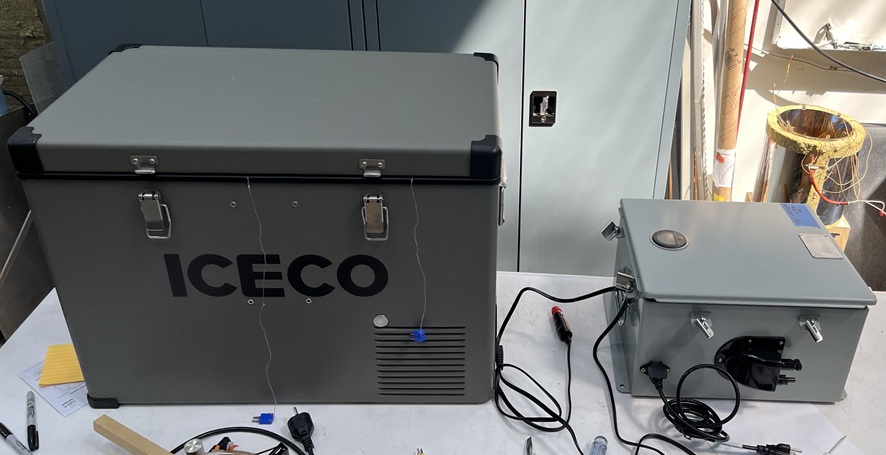
Figure 4: ICECO refrigerator and battery/electronics enclosure
Thermal performance
Results of two tests: independence and cooldown + independence, are shown in the figures below.
In the first instance, the fridge was cooled down while connected to external power. At the time indicated by the vertical red line, the external power source was disconnected. The fridge held its vaccine compartment temperature under +8°C for 44 hours and 22 minutes at an ambient temperature of +43°C.
In the second instance of Figure 6, the battery was charged by external power while the fridge was equilabrated to its surroundings at +43°C. Then external power was removed and the unit switched on. It cooled its vaccine compartment to below +8°C within about an hour, and maintained temperature for an additional 35 hours, 44 minutes.
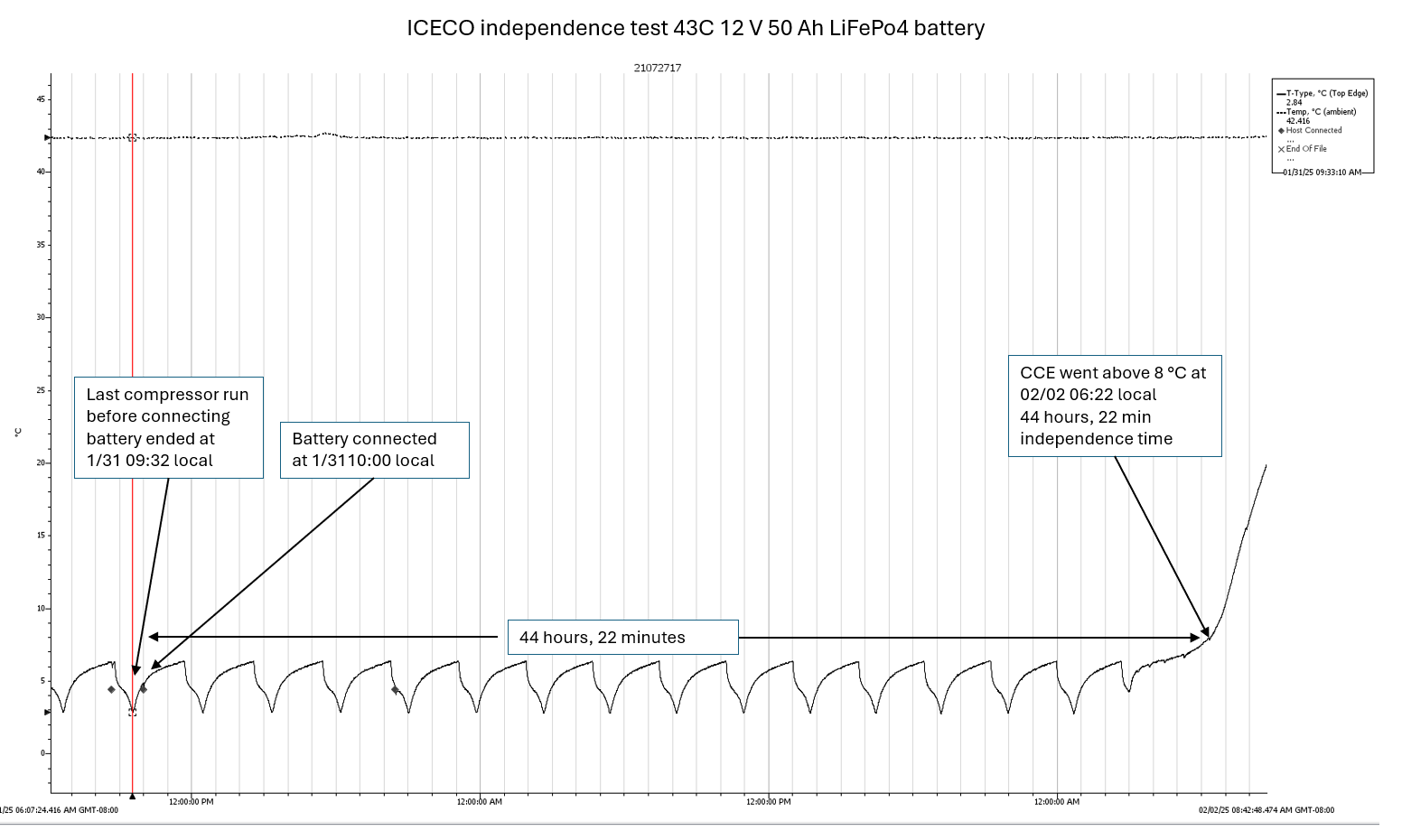
Figure 5: Modified ICECO refrigerator independence test
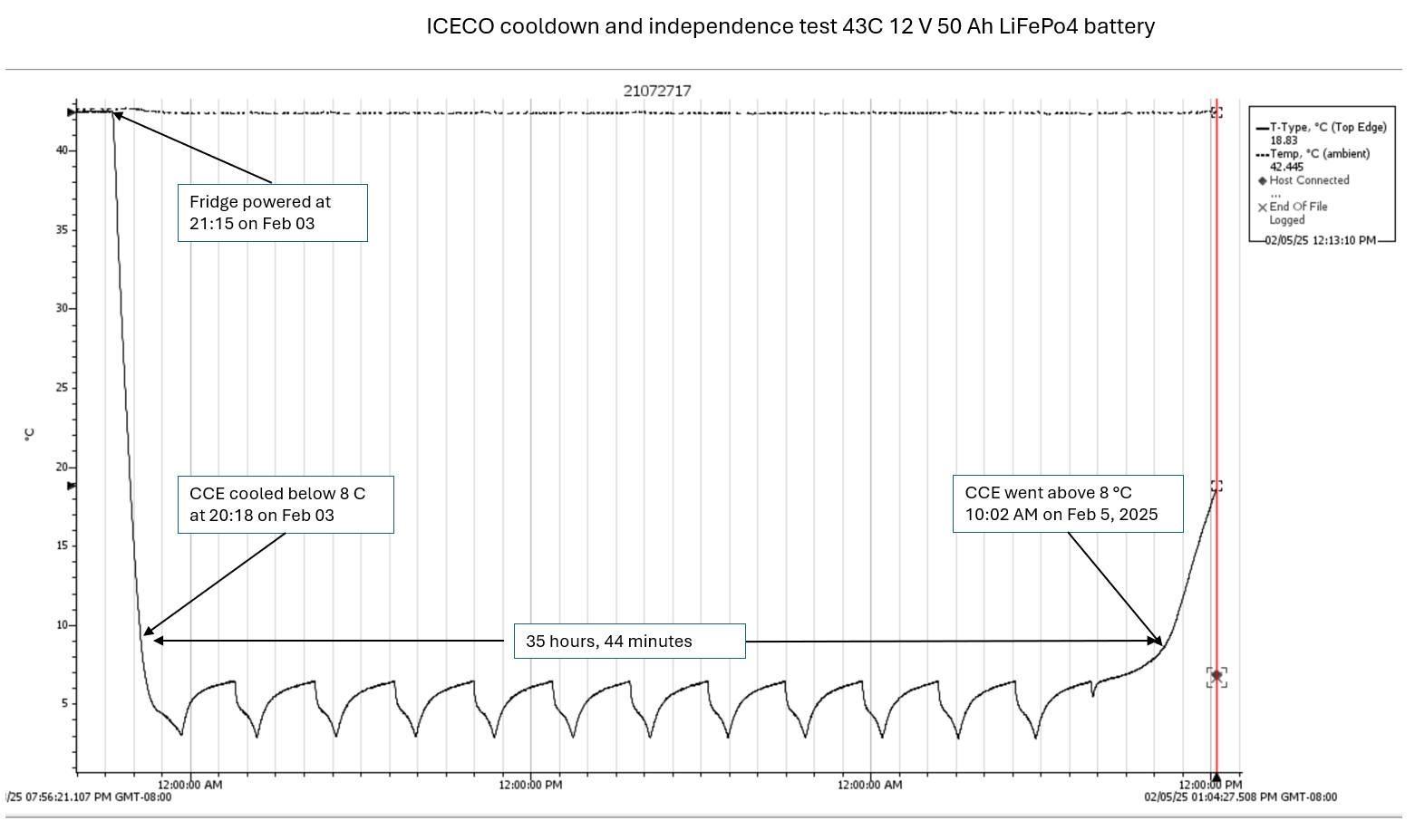
Figure 6: Modified ICECO refrigerator combined cooldown and independence test
Conclusions
While preliminary, the results of this technology demonstrator show that a battery-based solution is possible. Next steps would include a more detailed refrigerator design and analysis of required photovoltaic sizing in different locations.
Contact
Contact: Brian Pal
For more information, contact us about battery-augmented CCE.
Endnotes
Fridge type nomenclature
Although both mains- and solar-powered vaccine refrigerators have ice linings, "ILR" has become a common shortcut for "mains powered" as distinct from "SDD" for "solar powered".
Phase-change nomenclature
Technically, "phase-change material" means any material used for its property of absorbing/releasing heat as it changes between the solid, liquid, and/or gas phases. Therefore, the water/ice lining in vaccine fridges is a PCM. However, in the WHO PQS context, "PCM" usually means a material other than water.
Comparing energy density
Below we compare the specific energy and energy density between water's heat of fusion and LiFePO4's energy storage (LiFePO4 ranges are from Wikipedia). Effective achievable values will be lower in a full refrigerator design due to the need for enclosures, refrigeration systems coupled to the water, battery-charging electronics, etc.
Mass (specific energy):
- Water's heat of fusion = 334 kJ/kg * (1 Wh/3600 J) = 93 Wh/kg
- LiFePO4 120 Wh/kg (Wikipedia lists 90-160 Wh/kg. The batteries used in the example were about 120 Wh/kg.)
- LiFePO4 is slightly lighter.
Volume (energy density):
- Water 93 Wh/kg * (1 L/1 kg) = 93 Wh/L
- LiFePO4 325 Wh/L
- LiFePO4 is substantially smaller.